Photographing Energy, Not Just Musicians
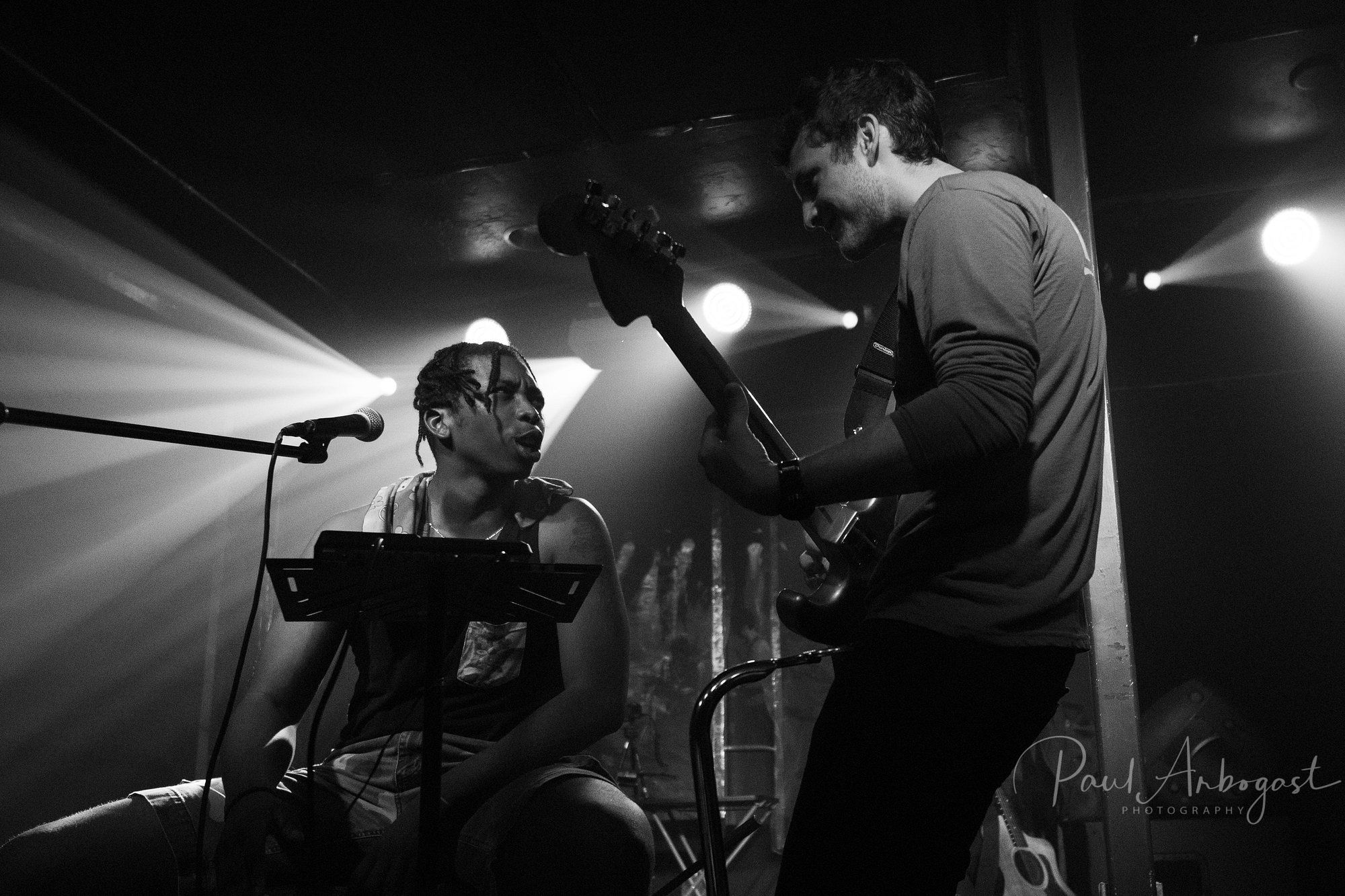
When people think about live music photography, they usually think about the obvious things — guitars, microphones, stage lights, dramatic expressions.
Those are all part of it.
But I’m not really photographing musicians.
I’m photographing energy.
There’s a difference.
A technically clean image of someone holding a guitar doesn’t say much on its own. It shows what they’re doing. It doesn’t always show what’s happening.
What’s happening is where the photograph lives.
It’s in the way someone leans into a note. The way a drummer tightens their shoulders just before a fill. The way a singer closes their eyes not for the crowd, but because they’re inside the moment.
Those things aren’t props. They’re not poses. They’re reactions.
And reactions are energy.
Live music taught me early on that if you only chase the obvious moments, you’ll miss the real ones. The big jump, the wide-open mouth, the raised guitar — those happen. They’re exciting. But the more subtle shifts often tell a deeper story.
Sometimes the most powerful frame of the night is taken in between songs. When someone turns away from the mic. When the crowd noise drops for a second. When a musician exhales.
Energy doesn’t always look loud.
Sometimes it looks focused. Sometimes it looks quiet. Sometimes it looks like tension building before release.
That’s what I’m watching for.
It also means I’m not just watching the person with the spotlight. I’m watching the band as a whole. The way they glance at each other. The way they cue transitions without words. The way one person’s movement ripples through the rest of the stage.
Music is movement, but it’s also relationship.
If I only photographed instruments, I’d miss that.
The technical side matters, of course. You have to know how to handle low light, shifting colors, fast motion. But settings are just tools. They help you capture something. They aren’t the thing itself.
The thing itself is energy.
And energy is unpredictable.
It doesn’t happen on command. It doesn’t repeat perfectly. It rises and falls throughout a set, sometimes in ways the audience doesn’t even consciously notice.
My job isn’t to document who was there and what they played.
It’s to catch the current running through the room.
Because years later, when someone looks back at an image from a show, they don’t want to remember the brand of the guitar or the color of the lights.
They want to remember how it felt.
And if the photograph carries that feeling — even quietly — then it did its job.